
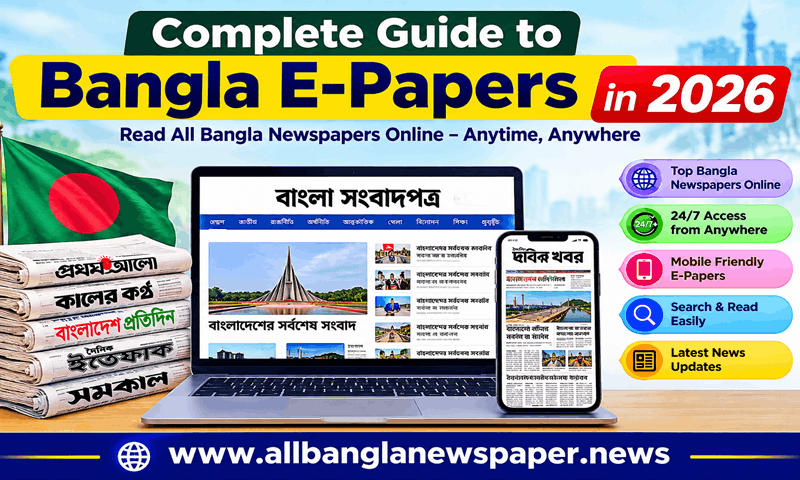
In 2026, one of the most popular ways to read Bangla newspapers remains the e-paper — a digital replica of the printed newspaper that preserves the original page layout, headlines, photographs, and design. For many readers in Bangladesh and across the diaspora, the e-paper offers the familiar experience of a traditional newspaper combined with the convenience of online access.
This comprehensive guide from allbanganewspaper.news explains everything you need to know about Bangla e-papers in 2026. You will learn what e-papers are, which major newspapers offer free or paid versions, how to access them on different devices, the advantages and limitations of e-paper reading, practical tips for comfortable daily use, and how e-papers fit into a modern news-reading routine. Whether you prefer the classic newspaper look or need an efficient way to follow multiple titles, this article will help you make the most of digital editions.
What Exactly Is a Bangla E-Paper?
An e-paper (electronic paper or digital edition) is a faithful online version of the printed newspaper. Unlike a regular news website that presents stories in a continuous scroll or card format, an e-paper shows the exact pages as they appear in print. Readers can turn pages, zoom into specific articles, and see the same hierarchy of headlines, photos, and advertisements that print subscribers receive.
Most major Bangladeshi newspapers now publish an e-paper every day, usually available early in the morning or around the time the print edition is finalized. Some e-papers are completely free, while others require registration or a paid subscription.
Why E-Papers Remain Popular in 2026
Despite the growth of fast news websites and mobile apps, e-papers continue to attract large numbers of readers for several reasons:
- They recreate the traditional reading experience that many people grew up with.
- The fixed page layout helps readers understand the relative importance of stories (front-page placement vs inside pages).
- They work well for people who want to “read the paper” rather than jump between individual articles.
- They are convenient for diaspora readers who want the full daily edition without relying on print delivery.
- Many titles remain free or low-cost, making them accessible.
- They reduce paper consumption while preserving the newspaper format.
For older readers, students preparing for exams, and anyone who values the complete daily package, e-papers offer a balanced middle ground between pure print and pure digital scrolling.
Free vs Paid Bangla E-Papers in 2026
Access policies can change, but the general pattern observed in recent years remains useful as a starting point:
Commonly free or freely accessible e-papers (subject to change — always verify on the official site):
- Ittefaq (often free or lightly restricted)
- Several other national and regional titles
Paid or subscription-based:
Prothom Alo e-paper is widely known for requiring a paid subscription or trial for full access to the digital replica. Many readers still use the free website version of Prothom Alo extensively while paying only if they specifically want the e-paper format.
Other newspapers may offer limited free previews, registration walls, or freemium models. Regional newspapers also increasingly provide e-paper versions, sometimes free of charge.
Because policies and links can change, using a regularly updated directory is the most reliable way to find current working e-paper links.
How to Access Bangla E-Papers on Different Devices
On a computer or laptop: Most e-papers open directly in a web browser. You can usually navigate page by page, use thumbnail views, and zoom into text. A larger screen makes reading more comfortable and allows you to see page context clearly.
On a tablet: Tablets are often the ideal device for e-paper reading. The screen size sits between a phone and a full newspaper page, and touch gestures for zooming and page-turning feel natural.
On a smartphone: E-papers are readable on phones, but the experience is more limited because of the smaller screen. Zooming is frequently necessary, and page navigation can feel slower. Many readers use phones for quick checks and switch to a larger device for full reading.
Offline access: Some platforms allow downloading the day’s e-paper for offline reading. This is useful during travel, commuting, or in areas with unstable internet.
Apps vs browser: Some newspapers offer dedicated apps that include e-paper access. In other cases, the browser version remains the primary or only official route. Always prefer official sources to avoid unofficial or low-quality copies.
Benefits of Reading E-Papers
- Familiar format – The layout matches the print edition, which many readers find more satisfying than endless scrolling.
- Complete daily package – You receive the full newspaper rather than algorithm-selected stories.
- Better sense of hierarchy – Front-page stories, inside leads, and smaller items are visually distinct.
- Reduced distractions – Compared with social media or ad-heavy websites, a well-designed e-paper can feel calmer.
- Archival feel – Some readers like keeping or referring back to specific daily editions.
- Environmental consideration – Digital access reduces the need for physical paper while preserving the newspaper experience.
- Global availability – Diaspora readers can access the same edition as people in Dhaka or Chattogram.
Limitations and Challenges
E-papers are not perfect for every situation:
- Page-turning interfaces can feel slower than scrolling websites for readers who want only a few specific stories.
- Small phone screens require frequent zooming.
- Paid e-papers add cost for readers who only need occasional access.
- Search functionality inside some e-paper platforms is less powerful than on modern news websites.
- Loading full high-resolution pages can consume more data than text-based sites.
Understanding these trade-offs helps you decide when to use an e-paper and when to switch to a regular website or app.
Best Practices for Comfortable E-Paper Reading
- Use the largest convenient screen (tablet or computer preferred).
- Adjust brightness and use night mode or dark themes if available to reduce eye strain.
- Learn the navigation controls of your preferred e-paper platform (thumbnails, page list, zoom).
- Combine e-paper reading with selective website visits for breaking news or searchable archives.
- Set a regular time — many readers treat the morning e-paper session like the traditional newspaper habit.
- Download when possible if you will be offline later in the day.
- Keep a short list of 2–4 core e-papers rather than trying to open every available title daily.
- Use a bookmark folder or a central directory so you can open your preferred e-papers in one or two clicks.
How E-Papers Fit into a Modern Reading Routine
A practical hybrid approach works well for most people in 2026:
- Start with one or two e-papers for the complete daily overview and traditional reading experience.
- Use fast online portals or newspaper websites for breaking updates during the day.
- Return to e-papers or full website articles for deeper reading of important stories.
- Check regional e-papers occasionally if you want local coverage from a specific division or district.
This combination gives both the satisfaction of “reading the paper” and the speed of digital news.
E-Papers for Specific Audiences
- Diaspora readers: E-papers are especially valuable because they deliver the full daily edition without print logistics. Time-zone differences matter less when the complete paper is available online.
- Students and exam candidates: The full-page format helps with understanding news hierarchy and is useful for current-affairs note-taking. Many students keep a regular e-paper habit alongside selective website reading.
- Older readers: The familiar layout often feels more comfortable than modern card-based news sites.
- Environmentally conscious readers: E-papers offer a lower-paper alternative while retaining the newspaper structure.
Finding and Organizing E-Paper Links
Links to e-papers occasionally change, and new titles appear. Manually searching for each one every day is inefficient. A well-maintained directory that lists current e-paper links for major national dailies, regional newspapers, and related digital editions saves time and reduces frustration.
allbanganewspaper.news is designed to serve this purpose — providing organized access to Bangla newspapers and their e-paper versions so readers can focus on reading rather than searching.
Looking Ahead: The Future of E-Papers
E-paper platforms continue to evolve. Improvements in loading speed, mobile interfaces, offline capabilities, search within editions, and integration with subscription systems are likely. At the same time, traditional news websites and apps will keep advancing. The most successful newspapers will maintain strong e-paper offerings alongside flexible digital products, giving readers meaningful choice.
Enjoy the Newspaper Experience — Digitally
Bangla e-papers in 2026 offer a practical and satisfying way to stay informed. They preserve the structure and feel of the printed newspaper while adding the convenience of instant, location-independent access. Whether you prefer free editions from high-circulation titles or are willing to subscribe for a premium digital replica, e-papers remain a central part of the reading landscape.
Choose a small number of reliable e-papers, access them through official or well-organized channels, use a comfortable device, and combine them with other digital sources as needed. With a simple system in place, the daily newspaper habit can continue — and even improve — in the digital age.
Start with a trusted directory, open today’s e-papers, and enjoy the full newspaper experience wherever you are.