
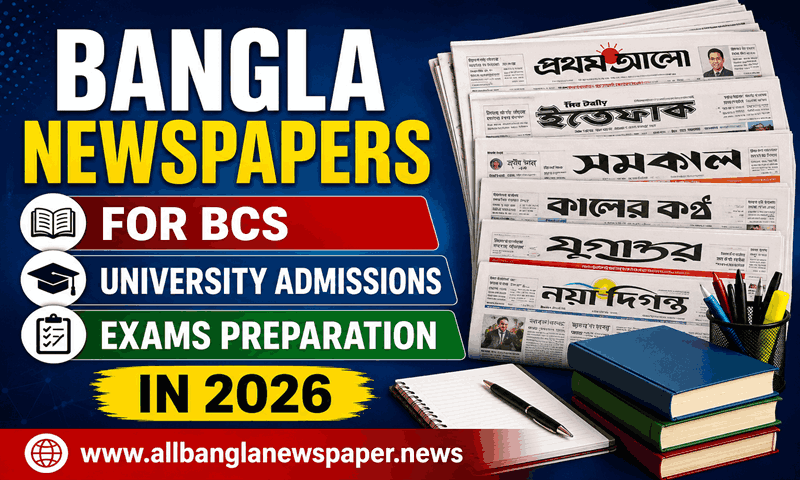
In Bangladesh, success in competitive examinations has long depended on more than textbooks and guidebooks. BCS (Bangladesh Civil Service), university admission tests, bank jobs, and other public examinations require strong command of current affairs, analytical ability, language skills, and general knowledge. One of the most effective, affordable, and time-tested methods to build these skills is the regular, structured reading of quality Bangla and English newspapers.
This comprehensive guide from allbanganewspaper.news explains exactly how students and job seekers can use Bangla newspapers in 2026 for exam preparation. It covers which newspapers to prioritize, what sections to focus on, how to take notes, how to balance Bangla and English sources, daily and weekly routines, common mistakes to avoid, and practical tips for both preliminary and written stages. Whether you are preparing for BCS, university admission, or other competitive exams, this article will help you turn daily newspaper reading into a powerful study tool.
Why Newspapers Remain Essential for Competitive Exams
Textbooks provide foundational knowledge, but they become outdated. Current affairs questions in BCS and similar exams test awareness of recent national and international events, government policies, economic trends, social issues, and scientific developments. Newspapers deliver this information in real time and in context.
Beyond facts, newspapers train several exam-critical skills:
- Analytical thinking through editorials and opinion pieces
- Vocabulary and precise language use (especially valuable for Bangla and English written papers)
- Ability to summarize complex issues
- Understanding of cause-and-effect relationships in politics, economy, and society
- Familiarity with official terminology and data presentation
Many successful BCS candidates and high-performing students consistently report that disciplined newspaper reading formed a core part of their preparation.
Recommended Newspapers for Exam Preparation
Not every newspaper serves exam needs equally. Focus on a small number of high-quality sources rather than trying to read everything.
Primary Bangla recommendations:
- Prothom Alo – Frequently recommended for its relatively detailed reporting, editorials, and analytical pieces. Useful for both content and language quality.
- Kaler Kantho – Widely used by students for accessible language and broad coverage.
- Other strong options include Jugantor, Samakal, and Bangladesh Pratidin depending on personal preference and reading comfort.
Primary English recommendations:
- The Daily Star – The most commonly suggested English newspaper for BCS and university-level preparation. Excellent for international affairs, vocabulary, and analytical writing style.
- Supplementary options include Dhaka Tribune or business-focused titles when economic topics dominate.
Digital portals such as bdnews24 and others can supplement for faster updates, but traditional newspaper-style reporting and editorials remain more useful for depth and exam-oriented analysis.
A central directory that lists all major titles makes it easy to switch between Bangla and English sources without wasting time searching for links.
What Exactly to Read in a Newspaper for Exams
Effective newspaper reading for exams is selective, not exhaustive. Aim for focused attention on high-value sections.
Daily priority sections:
- Front page and national news (major political, policy, and social developments)
- Editorial and opinion pages (critical for written exams and viva)
- Business and economy pages (budget, inflation, trade, remittances, major projects)
- International page (selected major global events and Bangladesh’s relations)
- Science, technology, environment, and education stories when relevant
Weekly or occasional focus:
- Special reports and investigative features
- Statistical data, charts, and official figures that can be quoted
- Cultural and social trend pieces that illuminate broader society
What to skip or limit:
- Pure entertainment and celebrity gossip (unless directly relevant to a social issue)
- Lengthy sports match reports (unless preparing sports-related questions or during major tournaments)
- Excessive local crime stories without national significance
The goal is quality and retention, not volume.
How to Read Newspapers Effectively for BCS and Other Exams
A common mistake is passive reading—simply going through pages without extracting usable material. Use an active method:
1. Skim first – Spend 5–7 minutes identifying the most important stories of the day.
2. Read selected items carefully – Focus on 4–8 high-value articles or editorials.
3. Take structured notes – Use a dedicated current-affairs notebook or digital document. Record:
- Date and source
- Key facts and figures
- Causes and consequences
- Government actions or policy implications
- Possible exam angles (why this matter, related previous events)
4. Summarize in your own words – Especially useful for written paper preparation.
5. Link to static knowledge – Connect news to constitutional provisions, economic concepts, geography, or history where relevant.
6. Review weekly – Revisit notes at the end of the week to reinforce memory.
Many successful candidates maintain both a daily short-note system and a monthly revision file of major issues.
Balancing Bangla and English Newspapers
A proven combination for BCS and similar exams is one strong Bangla newspaper + one strong English newspaper most days.
- Bangla sources help with national issues, Bangla writing style, and precise local terminology.
- English sources improve vocabulary, sentence structure, international perspective, and performance in the English paper and viva.
Even 20–30 minutes on each can yield better results than longer unstructured reading of a single paper.
Daily and Weekly Routine Suggestions
During intensive preparation phases (3–6 months before exam):
- 45–75 minutes daily on newspapers and note-making
- Morning or early evening slots often work best
- Weekend deeper review of the week’s major themes and editorials
During lighter or early preparation phases:
- 30–40 minutes focused reading
- Emphasis on building the habit rather than perfection
Near the exam (especially written and viva stages):
- Increase attention to recent editorials and major national developments
- Practice writing short analytical paragraphs based on recent news
Adjust the routine according to your overall study schedule. Consistency over months matters more than occasional long sessions.
Using Newspapers for Different Stages of BCS
Preliminary (MCQ) stage: Focus on factual current affairs, major appointments, international organizations, economic indicators, and science/environment developments. Quick daily scanning plus weekly revision of notes works well.
Written stage: Editorials, analytical articles, and detailed policy coverage become more important. Practice turning newspaper insights into structured answers. Language quality in both Bangla and English papers benefits directly from regular newspaper exposure.
Viva stage: Broad awareness, the ability to discuss recent issues calmly, and familiarity with different perspectives help. Newspapers train you to speak about current topics with substance rather than slogans.
Similar principles apply to university admission tests and other competitive exams that include current affairs or general knowledge components.
Note-Making Systems That Work
Several practical systems are popular among serious candidates:
- Issue-based files – Separate sections or digital folders for Economy, Politics, International Relations, Environment, Education, etc.
- Monthly current affairs compilation – Condense the month’s most important stories into 8–12 pages.
- Quote and data bank – Collect useful statistics, official statements, and well-phrased sentences that can be adapted in answers.
- Digital + handwritten hybrid – Many students keep quick digital notes and transfer key points to a handwritten revision notebook.
Choose one system and stick to it. The best system is the one you will actually maintain.
Common Mistakes to Avoid
- Reading without note-taking (most information is forgotten within days)
- Trying to read too many newspapers and ending up with superficial coverage
- Spending excessive time on low-value entertainment content
- Ignoring English newspapers entirely (or ignoring Bangla ones)
- Collecting notes but never revising them
- Treating newspaper reading as optional rather than a fixed daily habit
- Forwarding or relying on random social media current-affairs pages instead of original newspaper sources
Additional Tips for 2026 Aspirants
- Use e-papers or clean website versions for focused reading with fewer distractions.
- Keep a dedicated browser bookmark folder or use a newspaper directory so switching sources remains effortless.
- During major events (budget, elections, international summits, disasters), increase coverage temporarily and then return to normal routine.
- Discuss important issues with study partners or mentors to deepen understanding.
- Combine newspaper reading with standard current-affairs magazines or reliable monthly compilations for reinforcement, not replacement.
How a Newspaper Directory Supports Exam Preparation
When preparation intensity is high, small inefficiencies cost valuable time. Searching for the correct link to Prothom Alo, The Daily Star, Kaler Kantho, or an e-paper version every day adds friction. A well-organized directory that lists major Bangla and English newspapers, e-papers, and reliable portals in one place removes that friction and helps students maintain consistency.
allbanganewspaper.news is designed to make access simple so that your energy stays focused on reading and note-making rather than searching.
Turn Daily Reading into Examination Strength
Newspapers will not replace dedicated study of core subjects, but they multiply the effectiveness of that study by keeping your knowledge current, your language sharp, and your analytical ability active. In the competitive environment of BCS and other examinations in 2026, candidates who develop a disciplined newspaper habit gain a measurable advantage in current affairs, written expression, and overall confidence.
Start with one Bangla and one English newspaper. Read selectively. Take usable notes. Review regularly. Maintain the habit for months rather than weeks. Over time, this simple daily practice compounds into one of the strongest elements of a serious preparation strategy.
Stay consistent. Read with purpose. Let quality journalism become part of your examination success.